Description
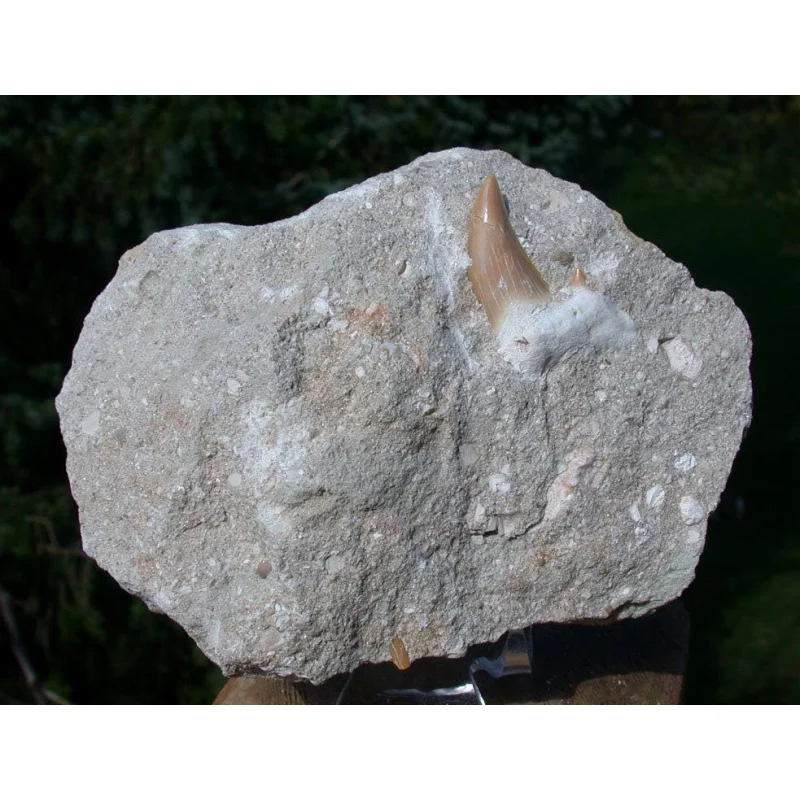
This is a real fossil tooth (and a nice big one!) from a pre-historic Mackerel shark known as Otodus obliquus. There is a visible fracture near the tip of the tooth, but it isn’t loose and is much harder to detect in person than the sunlit photo suggests. This is a Paleocene era fossil making it about 56 to 66 million years old! It’s much larger than the typical shark tooth you can still find on beaches today. These spectacular fossil teeth are both nicely colored and show a wide triangular crown guarded by large side cusps in the best specimens. This fossil tooth is presented in its natural matrix “in situ” (as it was found). This one shows a nice guard cusp while the rest of the tooth is still embedded in the original matrix. The tooth is chiseled from a solid stone matrix revealing both the bony root and the enameled, shining “business end” of this fabulous tooth! The matrix shows parts of other incomplete teeth and/or fossil fragments embedded in it as well – a great fossil treasure!
Otodus obliquus was the king of all sharks during it’s reign and is believed to be the ancestor to today’s great whites and the Megladon (which produced the largest fossil shark teeth but they aren’t quite as intricate).
These fossils were recovered from the Sahara, specifically the Khouribga phosphates in Morocco. This deposit contains fossil over a long (25 million year) time window that ranges from the Late Cretaceous (more than 66 million years old) to the Eocene epoch (34 to 56 million years old). Each tooth has full enamel and is complete and in tact.
The tooth itself is about 1.4″ long including the root. The fossil weighs 0.94 lbs. in a natural matrix mount that is about 4 1/2″ wide overall.